
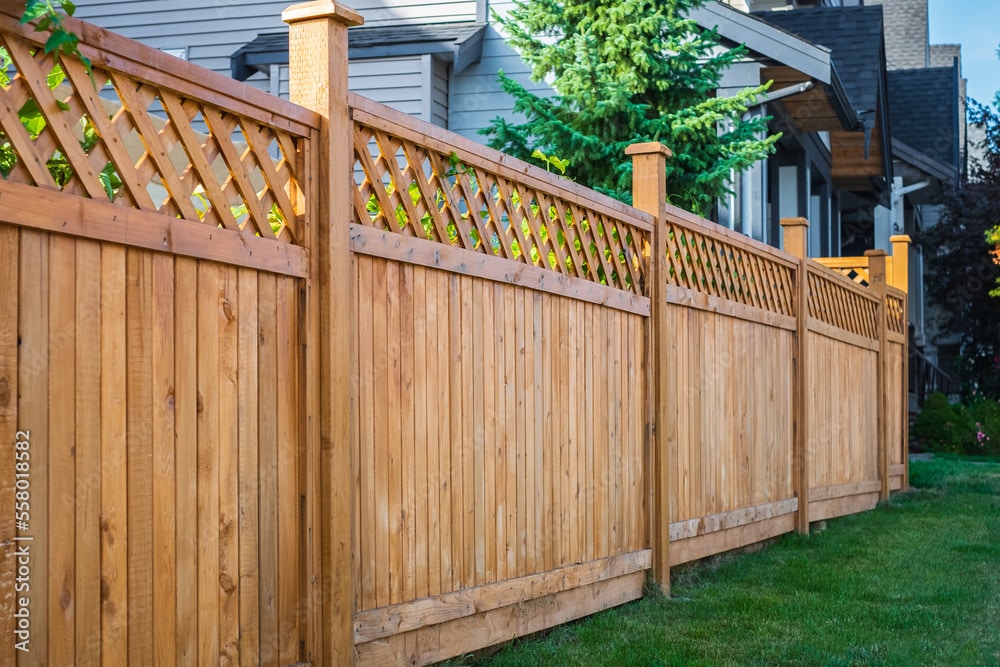
Most homeowners shopping for a privacy fence start with a single question. How tall does it need to be? That’s the right instinct, but it’s only one part of the answer. A six-foot fence with gaps between the boards blocks less than a five-foot fence with overlapping construction. A fence that looks solid from straight on can be completely see-through from an angle. And a fence that gives you total privacy in your backyard might do nothing about the second-story windows of the house next door.
Real privacy comes from thinking about sightlines, not just height. Where are people actually looking from? Where do you actually need to be unseen? And what fence design (in what material, at what height) actually accomplishes that?
This guide walks Commerce City homeowners through the practical decisions that go into a privacy fence that actually delivers privacy, including the local code considerations, the material trade-offs, and the design details that separate fences that work from fences that just look like they should
Start With What You’re Actually Trying to Block
Before talking about heights or materials, walk your property and identify exactly where the privacy problems are. This sounds obvious, but most homeowners skip it and end up with a fence that addresses the wrong sightlines
Stand in the spots where you want privacy Your patio, your hot tub location, your back windows, your kids’ play area. Look outward from each of these spots. Where are people actually visible? Where are the gaps in existing screening? Which neighboring houses, streets, or shared spaces create the privacy concern?
Stand in the spots where other people see in from Walk to the property line and look back at your house. Walk to neighboring driveways, second-story windows, common areas, and any elevated points. What’s visible from each of these locations? Are there angles you hadn’t considered?
The combination of these two walks tells you exactly where the sightlines are that need blocking. A privacy fence that addresses them is dramatically more effective than one designed around assumptions.
Commerce City Height Considerations
Commerce City code generally allows residential privacy fences up to six feet in rear and side yards, with lower height limits in front yards and on corner lots. Specific situations (lots with significant grade changes, properties on busier streets, certain HOA-controlled neighborhoods) sometimes allow or require different heights.
Here are a few practical notes on height.
Six feet is the standard maximum and it’s the right choice for most backyard privacy applications. It blocks ground-level sightlines from neighboring yards and from people walking past on shared paths or sidewalks.
Six feet does not block second-story sightlines If your privacy concern is windows on a neighboring two-story house, a six-foot fence won’t address it. You’ll need to think about strategic landscaping, pergolas, or other vertical screening at the actual area where you want privacy rather than only at the property line.
Lower heights in front yards Most front-yard fence regulations cap height at three to four feet, which is rarely enough for true privacy but can still be useful for defining boundaries and reducing casual sightlines.
Corner lots and sight triangles Properties at intersections often have additional height restrictions near the corner to maintain visibility for drivers. These rules are taken seriously by code enforcement and are worth confirming before designing a fence.
Always confirm specific regulations with Commerce City’s planning department before finalizing a design. Codes change, and individual properties sometimes have site-specific requirements.
Material Options That Actually Block Sightlines
The material you choose affects privacy more than most people realize. Some materials create solid visual barriers. Others look private from one angle but reveal everything from another.
Wood Privacy Fences
Wood is the most common privacy fence material in Commerce City and for good reason. It’s affordable, customizable, and when designed correctly, creates an excellent visual barrier.
Dog-ear and flat-top picket designs When boards are installed edge-to-edge with no gaps, these traditional fence styles block sightlines effectively. The key word is no gaps. Boards installed with even a half-inch gap between them create dramatic sightlines from any angle other than dead-on.
Board-on-board construction This style overlaps boards on alternating sides of the fence rails, creating a fence that looks similar to a standard privacy fence but has no see-through gaps regardless of viewing angle. Slightly more expensive than basic privacy fencing, but meaningfully more private. For most homeowners who actually want privacy, board-on-board is the right starting point.
Tongue-and-groove construction Boards lock into each other creating a completely solid barrier. The most private wood option, with no gaps at all, and typically the most expensive wood option.
Shadowbox or good-neighbor style Boards alternate between the two sides of the fence with no overlap. This creates a fence that looks finished from both sides (which is great for neighbor relationships) but has visible gaps from any angle, which compromises real privacy. If true privacy is the goal, shadowbox is not the right design.
Wood durability in Commerce City Cedar is the most common premium wood option, with naturally rot-resistant heartwood that handles Colorado weather reasonably well. Pressure-treated pine is more affordable but requires more maintenance. Either way, expect to stain or seal a wood fence every two to four years to keep it looking and performing well.
Vinyl Privacy Fences
Vinyl (PVC) fencing has become increasingly popular as the products have improved. Modern vinyl is dramatically better than the brittle, hollow-looking products of 15 years ago.
Solid panel construction Quality vinyl privacy fences use tongue-and-groove panel construction that creates a completely solid visual barrier with no gaps. This is the most common vinyl style and works well for genuine privacy.
Maintenance and longevity Vinyl doesn’t need staining, sealing, or painting. It cleans up with water and the occasional power wash. Quality vinyl lasts 25 to 30 years in Commerce City’s climate without significant degradation.
Trade-offs Vinyl is more expensive than wood upfront, though lower lifetime maintenance often makes it cheaper over 20-plus years. Aesthetics are limited compared to wood. You’re typically choosing from white, tan, or gray, and the look is decidedly modern. Some homeowners love it, others miss the warmth of wood.
Composite Privacy Fences
Composite fencing (the same wood-and-plastic blend used in composite decking) bridges the gap between wood and vinyl. It looks more like wood than vinyl does but provides similar low-maintenance performance.
Privacy effectiveness Composite panels are typically tongue-and-groove or solid-board construction, providing excellent sightline blocking with no gaps.
Trade-offs Composite is generally the most expensive of the common privacy fence materials, though it offers the best balance of natural appearance and low maintenance for many homeowners.
Metal and Other Materials
Steel, aluminum, and chain link with privacy slats can all create privacy fences in specific situations, though they’re less common for residential applications than wood, vinyl, or composite. Corrugated metal panels have become popular for modern aesthetic projects and provide complete privacy with an industrial look that some Commerce City homeowners love.
Design Details That Make or Break Real Privacy
Even with the right material at the right height, several design decisions determine whether your fence actually blocks the sightlines you care about.
Gate design Standard fence gates often have visible gaps along hinges and latches that create unexpected sightlines. A well-designed privacy fence treats the gate as part of the privacy plan rather than an afterthought, with appropriate trim and stop boards that maintain visual continuity.
Bottom gap Most fences are installed with a small gap between the bottom of the boards and the ground to prevent rot. This gap creates ground-level sightlines that compromise privacy and let pets escape. Solutions include kickboards, ground-level trim, or careful grading. Discuss this with your builder during design rather than discovering it after installation.
Top design Adding lattice, a horizontal cap, or a decorative top to the fence affects both appearance and privacy. Lattice toppers add height for vines and reduce the prison-wall feel of a tall solid fence, but they don’t add real privacy. If you’re choosing a topper purely for screening, accept that it’s mostly aesthetic.
Post wraps and trim How posts are integrated into the fence affects appearance significantly. Exposed posts on the outside of the fence can look unfinished. Trimmed posts that blend into the panel design look more intentional. This is a detail worth specifying rather than assuming.
Grade transitions Commerce City lots vary in their topography, and how a fence handles slope matters. Stepped fencing creates dramatic visible gaps at each step. Racked (or raked) fencing follows the slope smoothly. For privacy applications, racked installation is almost always preferable.
Corner construction How the fence wraps corners affects both appearance and the integrity of the privacy barrier. Cheap installations sometimes leave visible gaps at corners that compromise the overall effect.
Strategic Height Variations
Sometimes the best privacy fence isn’t the same height all the way around. A few strategic variations to consider.
Higher sections at specific privacy zones If your concern is a hot tub or a specific patio area, the fence in that section could be six feet while less sensitive areas drop to four or five. This delivers real privacy where you need it without surrounding your entire yard in a tall wall.
Pergolas and overhead structures For blocking second-story sightlines, vertical extensions of the fence don’t work (height limits and visual impact), but a pergola or covered structure over the area you want private can add overhead screening without requiring a 10-foot fence.
Landscape integration Trees, large shrubs, and vines on the fence dramatically increase privacy without adding fence height. A six-foot fence with mature evergreens beside it creates a far more private space than the fence alone.
Common Mistakes That Compromise Privacy
A few patterns that show up repeatedly in privacy fence projects that don’t quite deliver.
- Choosing shadowbox or board-and-batten styles assuming they provide privacy when they leave significant gaps.
- Skipping kickboards or bottom trim and ending up with ground-level sightlines.
- Stepping a fence down a slope rather than racking it, creating visible gaps at each step.
- Treating the gate as separate from the fence design and ending up with the most exposed section right where people enter.
- Focusing only on the property line when the actual privacy need is at a specific spot in the yard.
- Choosing height based on assumption rather than actually walking the sightlines first.
Bringing It All Together
A privacy fence that works isn’t just a tall fence. It’s a fence designed around the specific sightlines you care about, built in a material that blocks views from every angle, with the construction details (no gaps, racked grade transitions, integrated gates, proper bottom treatment) that maintain the privacy barrier consistently.
For most Commerce City homes, a six-foot board-on-board wood fence or a solid-panel vinyl fence delivers real privacy at reasonable cost, with material choice coming down to maintenance preference and aesthetic taste. Higher-end projects often use composite for the best balance of natural look and low maintenance. Corner lots, sloped properties, and homes with second-story neighbors usually need additional thinking beyond a standard fence design.
Ready to Build a Fence That Actually Blocks the Views You Care About?
The difference between a fence that looks private and a fence that is private comes down to design choices that are easy to overlook on a quote sheet. Getting them right starts with walking your property, identifying the actual sightlines, and choosing a fence designed around them.
Denver Fence Guys designs and installs privacy fences for Commerce City and the surrounding area, with attention to the sightline analysis and construction details that determine whether a fence delivers real privacy. Call us at +1 720 203 0550 to start planning a fence designed around how you actually want to use your yard.