
Every dog owner has had the moment. You let the dog out, you turn around for thirty seconds, and you come back to find them digging under the fence, squeezing through a gap you didn’t know existed, or staring intently at the neighbor’s yard like they’re three jumps away from being gone. A fence that keeps your dog contained isn’t a luxury. It’s the difference between a relaxed afternoon and a panicked sprint down the street calling their name.
Wheat Ridge has plenty of great features for dogs. Generous lots, walkable streets, real access to open space and trail systems. What it also has is wildlife, weather extremes, and varied housing stock that creates very different fencing situations depending on which part of town you’re in. A fence that works perfectly for a 12-pound terrier in a Sloan’s Lake-adjacent bungalow might be completely wrong for a 75-pound shepherd in an older home backing up to a greenway.
Here’s how to think about dog containment fencing for Wheat Ridge specifically, what works for different dogs and different yards, and what details actually matter when the goal is keeping your dog safely in the yard
Start With Your Specific Dog
Different dogs need different fences. There’s no universal “good dog fence” because dogs aren’t universal. Before any conversation about materials or heights, think honestly about your dog (or the dog you’re planning to get).
Size and athletic ability A small dog with short legs has completely different containment needs than a tall, athletic breed. Height, gap tolerance, and structural strength all scale with the dog.
Jumping tendency Some dogs never jump. Others can clear surprising heights from a standstill. Border collies, German shepherds, huskies, and many sporting breeds can clear four feet without much effort, and motivated jumpers can manage six feet if they’re determined.
Digging behavior Some dogs dig recreationally. Others dig only when they want out. Terriers, dachshunds, huskies, and many mixed breeds are known diggers. A fence that doesn’t address the bottom edge is wasted on a digger.
Prey drive Dogs with high prey drive react to squirrels, rabbits, cats, and birds in ways calmer dogs don’t. They’ll go through, over, or under a marginal fence in pursuit of motion. Wheat Ridge has plenty of rabbits, squirrels, and the occasional fox or deer, all of which can trigger pursuit instincts.
Climbing ability A surprising number of dogs can climb. Chain link is essentially a ladder to a dog that figures out the technique. Some dogs use horizontal rails on the inside of fences as steps.
Anxiety and barrier reactivity Some dogs are calm in a yard regardless of what’s on the other side. Others get reactive when they can see triggers (other dogs walking by, delivery drivers, people on the sidewalk). For reactive dogs, visual barriers matter as much as physical ones.
Once you’ve thought through your specific dog, the fencing decisions get much clearer.
Height Recommendations by Dog Type
Some practical starting points based on what tends to work.
Small dogs (under 25 pounds) A four-foot fence is usually enough for height, but the bottom edge matters more than the top. Small dogs squeeze through gaps far more easily than they jump over walls.
Medium dogs (25 to 50 pounds) A five-foot fence handles most dogs in this range, with six feet recommended for athletic or motivated jumpers. Bottom security and gap elimination remain critical.
Large dogs (50 pounds and up) Six feet is the right starting point, and athletic large breeds (shepherds, huskies, some retrievers) sometimes need additional features at the top to prevent jumping or climbing.
Extreme cases Some individual dogs, regardless of size, are determined escape artists. For these dogs, standard fencing alone isn’t enough and additional containment features (described below) become necessary.
In Wheat Ridge, residential fence height is generally capped at six feet in side and rear yards. This is plenty for the vast majority of dogs when the fence is designed correctly.
Material Options for Dog Containment
Different materials offer different advantages for dog owners. The right choice depends on your dog, your aesthetic preferences, and your budget.
Wood Privacy Fences
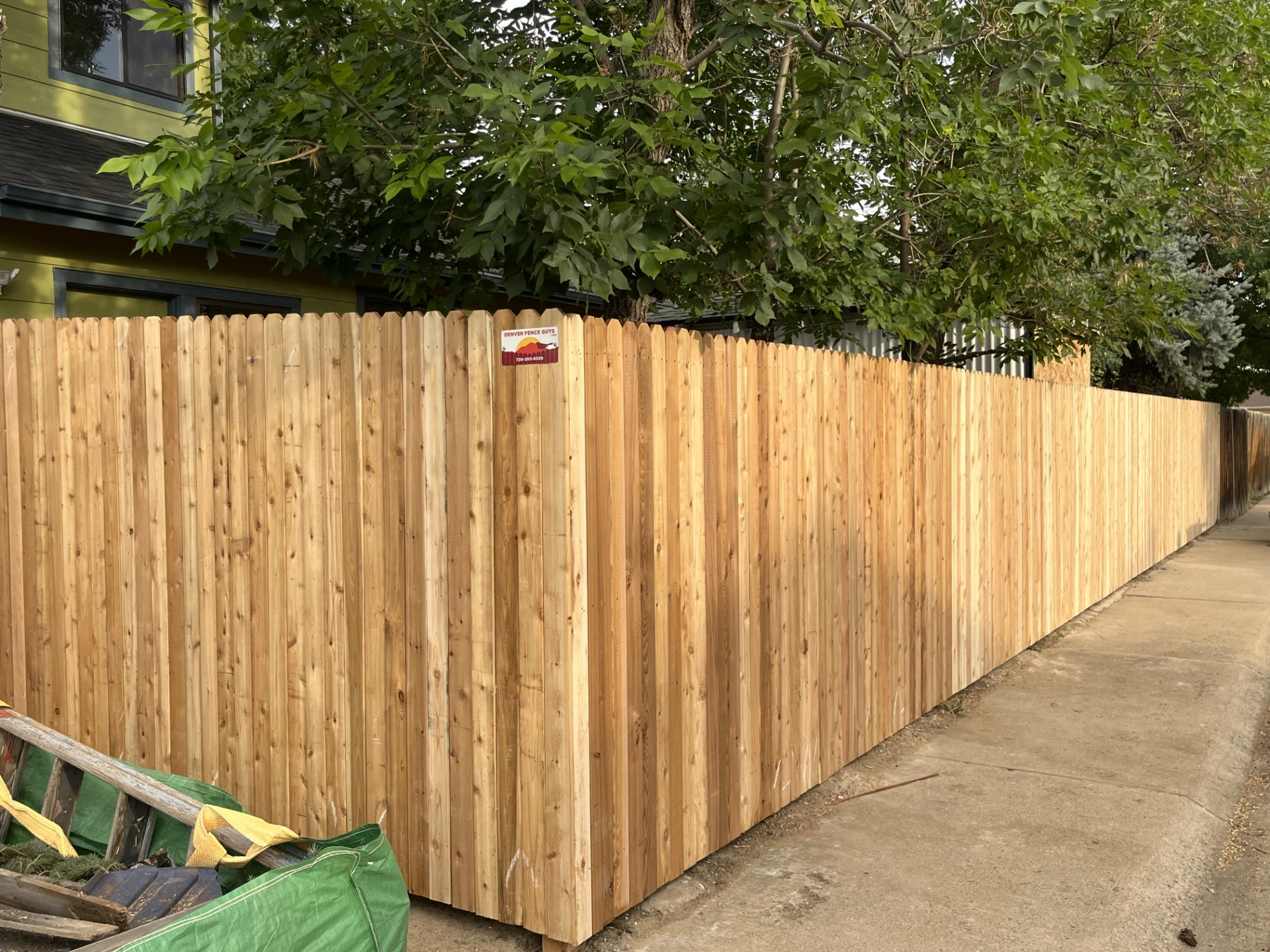
Wood privacy fences (especially board-on-board construction) work well for most dogs. The solid visual barrier addresses barrier reactivity by removing visual triggers, and the height and structural strength handle most jumpers and climbers.
Best for Most medium and large dogs, reactive dogs, dogs who get triggered by visual stimuli.
Considerations Wood needs maintenance (staining or sealing every two to four years in Wheat Ridge’s climate). Dogs that chew can damage wood at the base over time. Diggers need bottom-edge treatment regardless of material.
Vinyl Privacy Fences
Vinyl privacy fences provide similar benefits to wood with less maintenance. Solid panels create complete visual barriers, and the smooth surface gives climbing dogs less to grip.
Best for Most medium and large dogs, owners who prioritize low maintenance, climbing-prone breeds.
Considerations More expensive upfront than wood. Aesthetics are more limited (typically white, tan, or gray).
Composite Fences
Composite fencing combines the natural appearance of wood with the low-maintenance benefits of vinyl. Solid construction blocks sightlines and provides strong physical containment.
Best for Most dogs, owners who want a wood-like aesthetic without the upkeep.
Considerations Most expensive of the common privacy fence options.
Wrought Iron and Metal Picket
Decorative metal fences look great and provide strong physical barriers, but they don’t block sightlines and have vertical openings that can be a problem for small dogs.
Best for Calm large dogs with no reactivity issues, properties where preserving views matters.
Considerations Picket spacing is critical for small dogs (look for spacing of 3 to 4 inches maximum). Visual triggers remain visible, which is a problem for reactive dogs. Metal fences also provide footholds for climbing dogs if horizontal rails are positioned on the inside.
Chain Link
Chain link is affordable and durable, but it’s poorly suited to most dog containment situations.
Best for Budget-constrained projects, large yards where cost dominates.
Considerations Many dogs climb chain link easily. The diamond pattern provides footholds at any height. Visual barriers don’t exist unless you add privacy slats. Reactive dogs often become more reactive with chain link because they can see everything.
For most Wheat Ridge dog owners, a quality privacy fence (wood, vinyl, or composite) in solid panel construction at the appropriate height for your specific dog is the right starting point.
Bottom-Edge Solutions That Stop Diggers
This is the part most fence projects underestimate. A six-foot fence with a two-inch gap at the bottom is functionally useless against a determined digger. Several approaches work.
Kickboards A horizontal board (typically 6 to 12 inches tall) installed at the bottom of the fence and partially buried in the soil. This is the simplest dig prevention and works for moderate diggers.
Buried wire mesh Hardware cloth or chicken wire extending from the bottom of the fence horizontally into the yard for 18 to 24 inches, buried just below the surface. When a dog digs at the fence line, they encounter the mesh and give up. This is the gold standard for serious diggers.
Concrete trench footing For the most determined diggers, a continuous concrete trench under the fence line eliminates digging entirely. More expensive but completely effective.
Landscape rock barriers Heavy rock or paver borders along the fence line discourage digging by giving dogs nothing to dig in. Less effective than mesh but visually attractive and easier to install.
No bottom gap at all Some fence designs include kickboards that sit directly on the ground or are integrated into the structural design. This eliminates squeeze-under risk for small dogs but requires more attention to drainage and rot prevention.
For Wheat Ridge dog owners, addressing the bottom edge is non-negotiable for any dog with even mild digging tendencies. The investment is small relative to the rest of the fence and the difference in containment effectiveness is enormous.
Top-Edge Solutions for Jumpers and Climbers
For dogs that go over rather than under, several options exist.
Coyote rollers Horizontal rollers installed along the top of the fence that spin when a dog tries to get a grip. Originally designed to keep coyotes out of yards, they work equally well at keeping athletic dogs in. Among the most effective solutions for serious jumpers and climbers.
Lean-ins The top of the fence angles inward toward your yard, typically at 45 degrees. Dogs that climb encounter the angle and can’t continue upward. Effective for climbing dogs but visually noticeable.
Height extensions Adding height to an existing fence (within code limits) sometimes solves jumping problems for dogs that aren’t quite athletic enough to clear an extra foot. Less effective for determined climbers.
Smooth surface treatments Modifying the inside surface of the fence to remove footholds (covering horizontal rails with smooth panels, using vinyl-coated chain link) reduces climbing options.
For most pet owners, coyote rollers represent the best balance of effectiveness, aesthetics, and cost for jumping or climbing dogs.
Specific Wheat Ridge Considerations
A few factors that come up more here than in other areas.
Wildlife on the other side of the fence Properties backing up to open space, greenways, or undeveloped lots in Wheat Ridge get regular wildlife traffic. Deer, foxes, raccoons, and the occasional coyote all pass through. For dogs with prey drive or territorial reactivity, this matters in how you design the fence. Solid privacy fences dramatically reduce wildlife-triggered reactivity.
Older fence stock Many Wheat Ridge homes have older fences inherited from previous owners. Just because a fence has been working for a previous dog doesn’t mean it will work for yours. Walk older fences carefully looking for gaps, weak posts, rotted boards, and bottom-edge issues.
Snow load and gate operation Wheat Ridge winters bring snow accumulation that can affect gate operation, push against fence panels, and create unexpected escape opportunities. Gates that swing inward are usually preferable to outward-swinging gates because snow against the gate doesn’t prevent operation.
HOA and neighborhood regulations Some Wheat Ridge neighborhoods have additional fencing rules beyond city code. Confirming these regulations before designing a fence prevents conflicts later.
Slope and grade changes Many Wheat Ridge lots have notable slope, especially closer to the foothills. Fences on sloped lots need to be racked (following the slope smoothly) rather than stepped (which creates gaps at each step that small or determined dogs can exploit).
Putting Together the Right Fence for Your Specific Dog
A practical framework for thinking about dog containment fencing.
For a small, calm dog in a typical yard, a four to five foot wood or vinyl privacy fence with a proper kickboard and no significant gaps will handle the containment job well.
For a medium, energetic dog with mild digging or jumping tendencies, a six-foot privacy fence with buried wire mesh along the bottom edge addresses the most common escape methods.
For a large, athletic, motivated dog, a six-foot privacy fence with coyote rollers on the top and buried mesh at the bottom creates a containment system that handles even determined escape artists.
For a reactive dog, prioritize complete visual barriers (solid privacy fence panels) over decorative options that allow sightlines through the fence.
The honest answer is that the right fence is the one designed around your specific dog’s behavior, not a generic dog fence. A great fence company will ask about your dog before recommending materials, and the recommendations should change based on what you tell them.
Ready to Plan a Fence Built Around Your Dog?
Containment fencing isn’t one-size-fits-all, and the difference between a fence that works and one that lets your dog escape often comes down to details that don’t show up in a basic quote. Getting it right starts with an honest assessment of your dog and a design that addresses the specific containment challenges they bring.
Denver Fence Guys is a fence company that designs and installs fencing for Wheat Ridge and the surrounding Front Range, and can help you with dog containment fences(bottom-edge security, top-edge solutions, visual barriers, gate design) that actually keep your pets in the yard. Call us at +1 720 203 0550 to plan a fence designed around your property.